The Libor Scandal, or: It Is Never as Bad as One Imagines It. It Is Always Worse

In an article I posted on August 27, written in Italian, I offered some thoughts on the ‘Libor scandal’ as an example of the way ‘free markets’ work. I was trying to steer clear of any moral judgment on the banks’ behavior, or on any of their employee’s or managers’.

Now, our students at Mip Politecnico di Milano, being interested in issues relating to ‘business and ethics’ asked me whether I could expand on that article to see whether the matter treated therein could form a basis for a fruitful discussion about those issues. Not being an expert on ‘business ethics’ I simply oblige here to our students’ requests, hoping to be of service. And I do it in English, as a sign of respect to the multi-nation background of our international MBA class, the one the request originated from. Of course, I shall not even summarize my previous article, it being within the linguistic grasp of every member of the class.

Rather, I shall start out with a question that I imagine the general reader might have: so, your students’ request aside, are there any reasons why we should go back to the Libor-fixing issue? What has been happening over the last four months that warrants a re-examination?

Continue reading “The Libor Scandal, or: It Is Never as Bad as One Imagines It. It Is Always Worse”
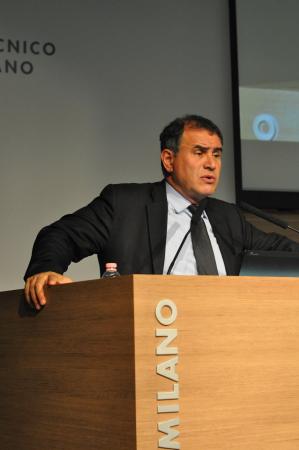
Nouriel Roubini’s lecture at Mip Politecnico di Milano: On ‘Europe and the Future of the World Economy’

Roubini 2On the evening of November 6th at Politecnico di Milano, we had the pleasure to host Nouriel Roubini, currently Professor of Economics and International Business at New York University Stern School of Business.

Mr. Roubini is a so well-known economist that I prefer not wasting anybody’s time attempting an introduction. Rather, I would like first to share my understanding of the points Roubini made during his lecture and then the following question-and-answer session.

As the title itself suggests, Roubini identified five major economic issues characterizing the current world juncture.


Continue reading “Nouriel Roubini’s lecture at Mip Politecnico di Milano: On ‘Europe and the Future of the World Economy’”

Lezione di Nouriel Roubini al Mip, School of Management del Politecnico di Milano: ‘L’Europa e il Futuro dell’Economia Mondiale’

Roubini 2

Lo scorso 6 Novembre, al Politecnico di Milano, abbiamo avuto il piacere di ospitare Nouriel Roubini, Professore di Economia alla Stern School of Business, New York University.

Data la sua notorietà, evito di sprecare tempo per presentarlo. Preferisco condividere invece alcuni punti chiave espressi da Roubini durante l’evento.

Come lo stesso titolo suggerisce, Roubini identifica cinque aspetti prinicipali che caratterizzano l’attuale congiuntura mondiale.

Continue reading “Lezione di Nouriel Roubini al Mip, School of Management del Politecnico di Milano: ‘L’Europa e il Futuro dell’Economia Mondiale’”

欧洲经济衰退,政府不愿伸出援手。 来自中国的需求会拯救欧洲吗?

written by Fabio Sdogati and Yiwen Zhou

当前的经济危机已经持续五年之久,且并未呈现复苏迹象。在过去的三年里,笼罩在经济衰退阴霾中的国家政府无一不拒绝,并仍然拒绝采取唯一可以扭转局势的举措,即:刺激总需求。

Continue reading “欧洲经济衰退,政府不愿伸出援手。 来自中国的需求会拯救欧洲吗?”

Recessione in Europa. I governi si rifiutano di intervenire. La domanda verrà dalla Cina?

di Fabio Sdogati e Yiwen Zhou

La crisi attuale dura ormai da cinque anni, e sta peggiorando. Negli ultimi tre anni i governi dei paesi maggiormente colpiti dalla recessione si sono rifiutati, e continuano ad evitare, di compiere l’unica azione che invertirebbe questa evoluzione drammatica: ovvero, stimolare la domanda aggregata.

Ma non è stato sempre così. C’è stato un tempo, non molto addietro, in cui gli stimoli fiscali da parte dei governi non erano considerati un peccato.

Continue reading “Recessione in Europa. I governi si rifiutano di intervenire. La domanda verrà dalla Cina?”

Recession in Europe. Governments refuse to help. Will demand come from China?

The current crisis is five years old, and counting. Over the last three years the governments of the countries most affected by the recession have refused, as they still do, to take the only action that would reverse this dramatic trend: that is, to stimulate aggregate demand.

But it was not always like that. There was a time, not long ago, when government stimuli were not a sin.

Continue reading “Recession in Europe. Governments refuse to help. Will demand come from China?”